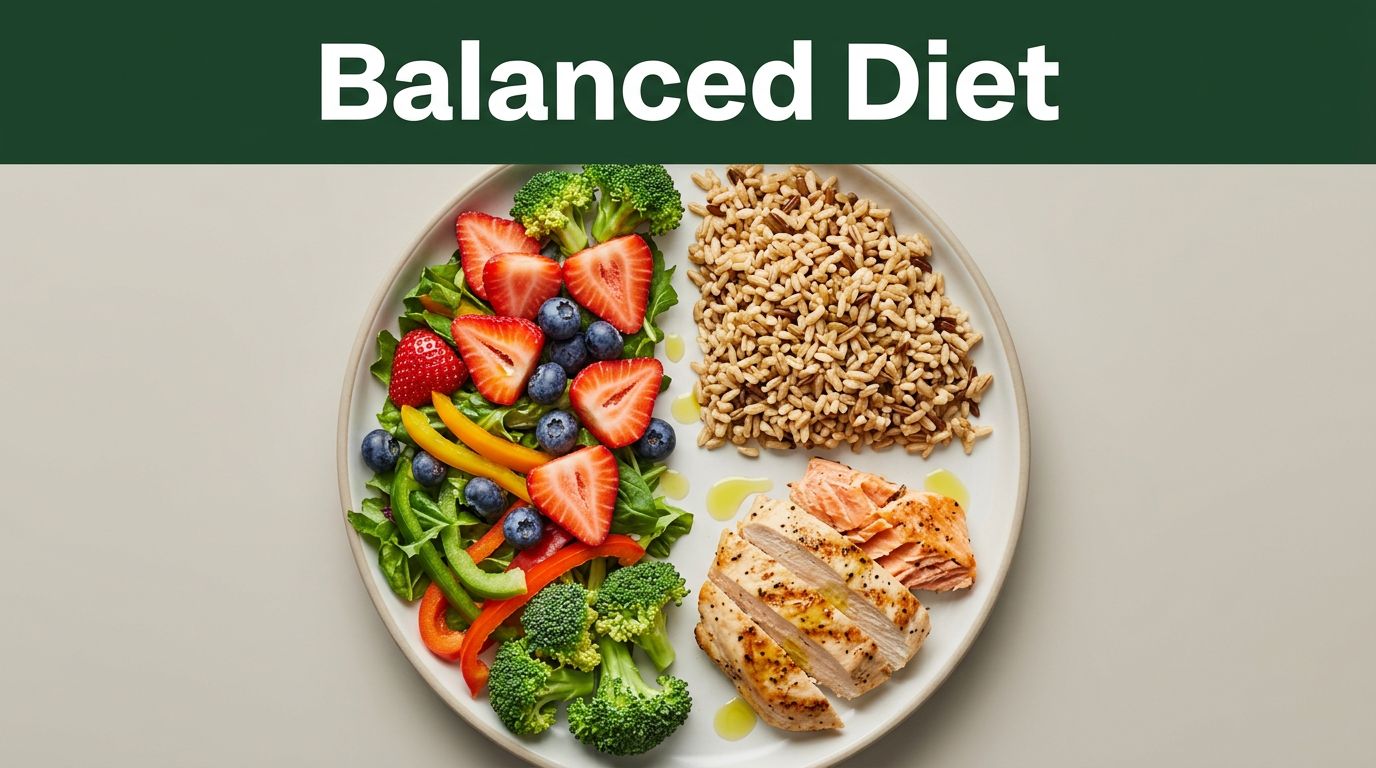
Have you ever felt tired or foggy after a meal, or had your energy crash a couple hours later? That usually happens when your food doesn’t give your body a steady mix of carbs, protein, fats, vitamins, and fiber. A balanced diet is a simple way to fix that.
Using the Harvard Healthy Eating Plate (and similar ideas to USDA MyPlate), aim for this: ½ your plate fruits and veggies, ¼ whole grains, and ¼ proteins, plus healthy oils and limited dairy. In plain terms, you get the nutrients you need without going overboard on things that can throw off blood sugar and hunger.
When you eat this way, you’re more likely to feel steady energy, easier weight control, and better long-term health. For example, whole grains and protein help smooth out blood sugar swings, which can mean fewer mid-day crashes. Over time, patterns like this also link to lower risk of heart disease and type 2 diabetes.
On the other hand, skipping balance can backfire fast. Too many refined carbs or missing fiber from fruits and veggies often leads to a cycle of spikes and dips in energy, plus stronger cravings.
Next, you’ll see exactly what balance looks like on your plate and why it matters for energy, weight, and everyday health.
Picture the Perfect Plate: What Makes a Diet Balanced
Balanced eating is easier when you stop thinking in single foods and start thinking in proportions. A “balanced plate” is like a well-tuned playlist. When the mix is right, energy feels steadier, hunger stays more manageable, and your body gets what it needs to run well.
Ready to fill half your plate with color?
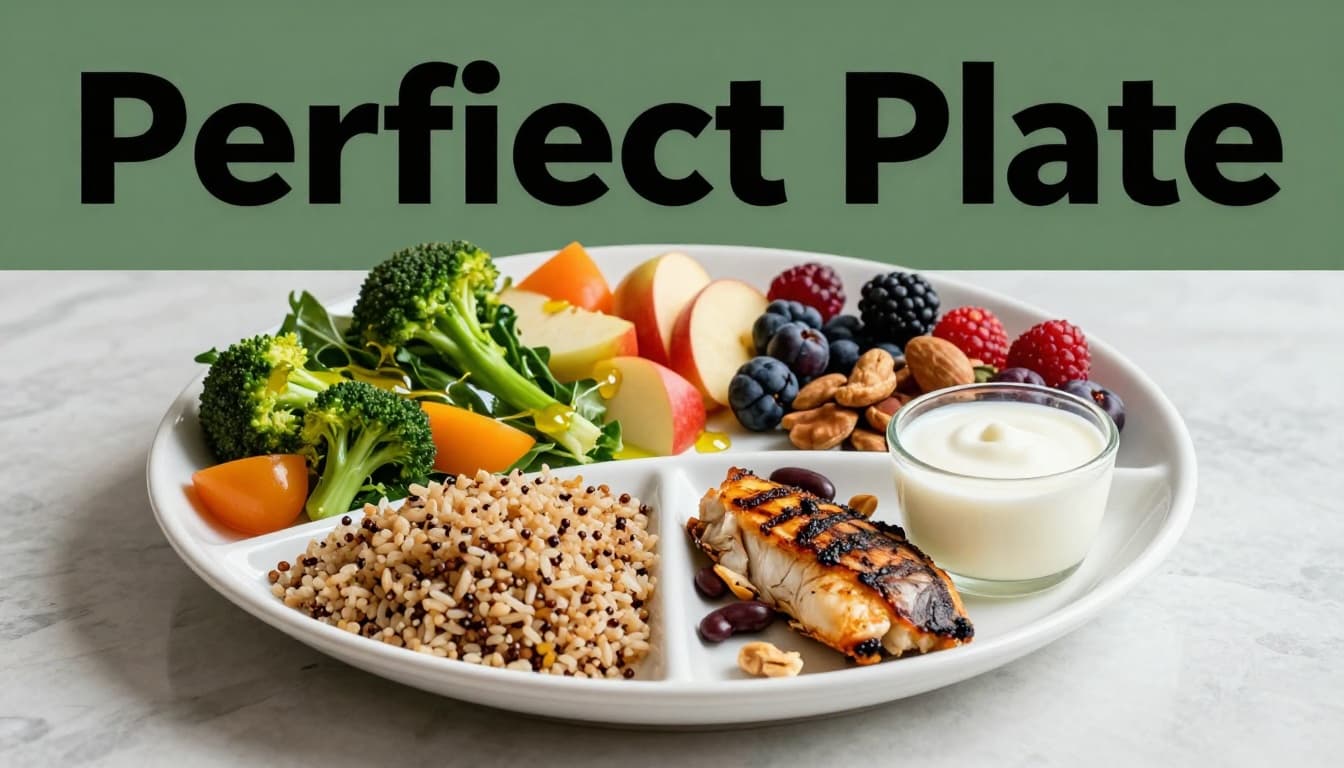
Here’s a simple way to visualize the Healthy Eating Plate model from Harvard’s Nutrition Source, alongside the more “portion-by-food-group” structure from USDA MyPlate. Both help you build meals that support weight, energy, and long-term health. For the plate framework, see Harvard’s Healthy Eating Plate and for USDA’s 2000-calorie daily targets, check USDA MyPlate’s 2000-calorie plan.
| Plate area (most meals) | What to choose (examples) | Daily guide (about 2,000 calories) |
|---|---|---|
| ½ plate | Veggies and fruit (leafy greens, broccoli, apples, berries) | Veggies: 2.5+ cups, Fruit: 2 cups |
| ¼ plate | Whole grains (brown rice, oats, whole wheat, quinoa) | Grains: 5 to 8 oz-equivalents |
| ¼ plate | Healthy proteins (beans, fish, poultry, nuts) | Protein: 5 to 6.5 oz-equivalents |
| Side | Low-fat dairy or plant alts (low-fat yogurt, fortified soy) | Dairy: 3 cups |
| Small amount | Healthy oils (olive, canola) | 5 to 6 tsp oils (on top of foods) |
Now, let’s break down what to put in each part of the plate.
Fruits and Veggies: Your Daily Power Boost
Think of fruits and veggies as your plate’s “battery charger.” They bring vitamins, minerals, and fiber, plus they usually pack fewer calories than many refined options. As a result, meals feel more filling without feeling heavy.
When Harvard and USDA models say “make it half,” that’s not random. Fiber helps your digestion move smoothly and can support more even blood sugar, which often means fewer energy dips later. Leafy greens and broccoli offer folate and vitamin C, while berries and apples add natural sweetness plus antioxidants.
To make this automatic, follow two habits:
- Add produce to every meal (breakfast counts).
- Choose variety across the week, especially dark greens, bright reds, and orange veggies.
Use simple swaps. Skip potatoes as the main side, and instead pick roasted broccoli, sautéed greens, or a big salad. If you want a snack, reach for fruit first, then add nuts or yogurt for staying power.
Whole Grains and Healthy Proteins: Steady Energy Sources
Whole grains and proteins work like a steady engine. Carbs from whole grains fuel you, while protein helps your body repair and rebuild. Together, they also support satiety, so you’re less likely to graze all day.
For grains, aim for the “whole” version most of the time. That means:
- Brown rice, oats, quinoa, whole wheat
- Foods where the grain still includes bran and germ
For proteins, choose options that come with fewer processing steps. Great picks include beans, fish, poultry, and nuts. These foods also give your meals structure, which helps you avoid the “snack cycle” that starts when you eat too little protein.
A quick daily mindset helps: ¼ grains, ¼ protein, not the other way around. If you build meals this way, you’re more likely to feel steady energy from lunch to dinner.
Dairy, Oils, and What to Limit
Balanced doesn’t mean “no fun foods.” It means you know where they fit.
Start with dairy or fortified alternatives. Aim for 3 cups daily of low-fat dairy or a fortified plant alternative. Then add oils wisely. Healthy oils, like olive oil, support flavor and nutrient absorption, but they still add calories, so keep it to about 5 to 6 teaspoons a day.
Now, what should you limit? Focus on three categories:
- Sugary drinks (they spike intake fast, without filling you up)
- Processed meats (higher sodium and added compounds)
- Refined carbs (white bread, many desserts, and snack chips)
Moderation keeps the plate balanced and helps your goals feel more realistic. When most meals follow the plate model, these limits become easy, not stressful.
Why Balance Your Diet: Health Wins and Pitfalls to Dodge
When your meals include the right mix of fiber-rich plants, quality carbs, enough protein, and healthy fats, your body runs smoother. It can feel like swapping a flickering light for a steady lamp. Most importantly, balance helps your long-term health, not just your mood after lunch.
Big Health Perks You Get from Balance
Balanced eating supports your body on multiple fronts at once. For one, it helps keep blood sugar steadier, which can mean fewer energy crashes and less intense cravings. Whole grains, beans, and vegetables tend to digest slower because they come with fiber, so your body absorbs nutrients in a calmer way.
It also offers protection where it matters most. Here’s what research and public health guidance consistently point to:
- Heart protection: Diet patterns rich in fruits, vegetables, and whole grains lower risk factors for heart disease.
- Diabetes prevention support: Better fiber intake and fewer blood sugar spikes can help reduce type 2 diabetes risk over time.
- Stronger bones: Enough nutrients like protein, calcium, and vitamin D (often from dairy or fortified options) support bone health.
- Lower cancer risk (for some cancers): Plant-forward diets, when they replace highly processed foods, can reduce risk through overall nutrient patterns.
- Better weight control: Balanced meals help you feel full, so overeating feels less automatic.
In addition, healthy eating supports immunity and digestion. The CDC notes that healthy eating patterns can help lower the risk of heart disease and type 2 diabetes, while also supporting bones, muscles, and immune function (Benefits of Healthy Eating for Adults | Nutrition – CDC).
Imagine fewer doctor visits. That is the quiet win. Not because food is magic, but because your daily choices nudge your body toward healthier pathways.

Antioxidants also play a role. When you eat more colorful produce, you bring in compounds that help reduce inflammation signals your body has to manage. Think of it like keeping a houseplant hydrated and trimmed, so it stays strong through changing seasons.
Troubles from Unbalanced Eating and How to Avoid Them
Unbalanced eating can create a ripple effect, like stepping on a loose floorboard and hearing the whole room shift. Too much sugar and refined starch often leads to faster blood sugar spikes. Over time, that can feed obesity risk and make type 2 diabetes more likely.
Another common pitfall is skipping produce. In the US, only about 10% of adults meet vegetable recommendations, and many people still fall far short of daily targets. One estimate shows adults average about 1.6 cup-equivalents of vegetables per day, but the recommended range is closer to 2 to 3 cups for many adults. If vegetables stay low, you lose fiber, potassium, folate, and other nutrients that support both metabolism and gut health. The result can be weaker immunity and higher odds of long-term disease.
Then there is the “too much of one thing” problem. Eating lots of processed meats or relying on red meat as your main protein can raise heart and cancer risks. Meanwhile, too many refined carbs can crowd out nutrient-dense foods, so you end up eating more calories without the vitamins and minerals your body needs.
Here are practical ways to dodge these pitfalls without turning meals into a stressful math problem:
- Build meals around fiber: Start with a vegetable side or add fruit to breakfast.
- Choose whole carbs more often: Swap white bread and pastries for oats, brown rice, or whole-grain options.
- Pick protein that also helps: Use beans, fish, poultry, nuts, and eggs as defaults.
- Limit the “easy overeat” foods: Sugary drinks, chips, and desserts fit in occasionally, not daily.
If you want a simple reality check, the CDC explains that healthy eating focuses on whole, nutrient-dense foods and supports weight management and lower risk of serious conditions (Tips for Healthy Eating for a Healthy Weight – CDC).
Finally, remember the big trend in current US guidance: more emphasis on food quality and patterns that lean plant-forward, not just fewer calories. When you balance your plate, you give your body what it can use, and you reduce what it has to fight.
Your Easy Roadmap to Balanced Meals Starting Today
Balanced eating doesn’t start with a perfect week. It starts with a few small moves you can repeat, like choosing the same “good default settings” for your meals. When you build meals around plate portions, you stop guessing, and your food choices get easier.
Think of it like packing a lunch box. You pick a main item, add a couple sides, and you’re done. The goal here is the same, with plants, whole grains, protein, and smart fats showing up at most meals.
Also, 2026 eating trends are moving toward more plants and more fiber, without demanding you go fully vegan. So you can follow the plan even if you still enjoy meat sometimes. Your meals can be both satisfying and balanced, because variety keeps hunger and cravings calmer.
Before you shop or cook, use the “swap and build” method. First, swap one familiar item for a better option. Next, build your plate with the model you already know: ½ plate produce, ¼ whole grains, ¼ protein, plus a small amount of oils and dairy (or fortified alternatives).
If you want a simple official reference while you plan, the U.S. government’s Start Simple with MyPlate Today guidance gives the same core proportions and practical food-group ideas (Start Simple with MyPlate Today).
Quick Swaps for Everyday Wins
You do not need a full diet makeover. You need a few swaps that change your meal quality without changing your whole routine.
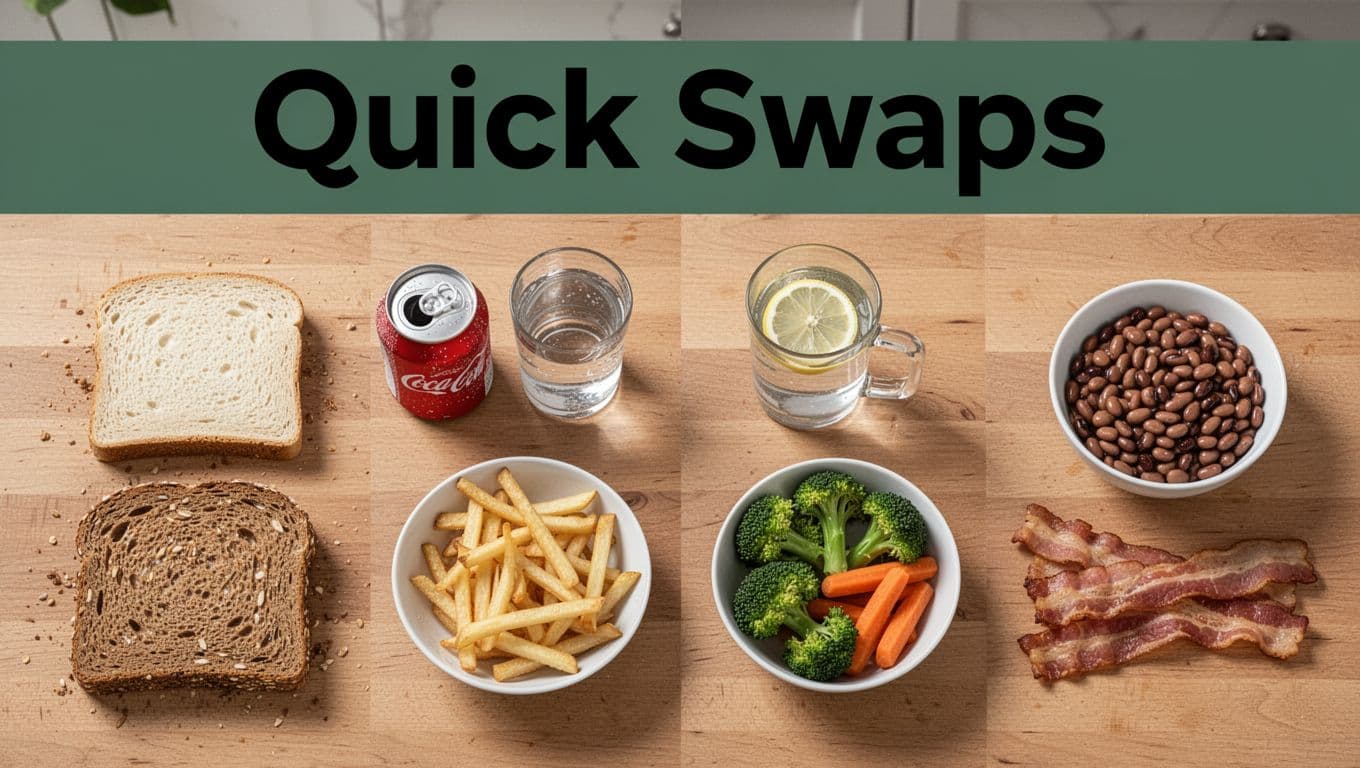
Here are easy swaps that match common “balanced diet” goals, like more fiber and steadier energy:
- White bread to whole grains: Choose whole wheat bread, whole-grain wraps, or sprouted grains. You still get carbs, but with more fiber.
- Soda to water (plus flavor): Swap soda for water with lemon, lime, or unsweetened sparkling water. Then keep sweetness for fruit or planned treats.
- Fries to steamed or roasted veggies: Keep the heat and crunch vibe by roasting, not deep-frying. Try broccoli, carrots, green beans, or Brussels sprouts.
- Bacon to beans: Use beans, lentils, chickpeas, or a bean-based dip. You cut processed meat and often add more fiber and protein.
If you eat out, this gets even easier. Pick a “swap side” first. For example, ask for a side salad instead of fries, or add beans instead of a second starchy side.
One more smart move: treat these swaps like automatic settings. Don’t wait for motivation. When you start making the same better choice at least a few times per week, your meals begin to feel normal, not “special.”
Sample Day of Balanced Eating
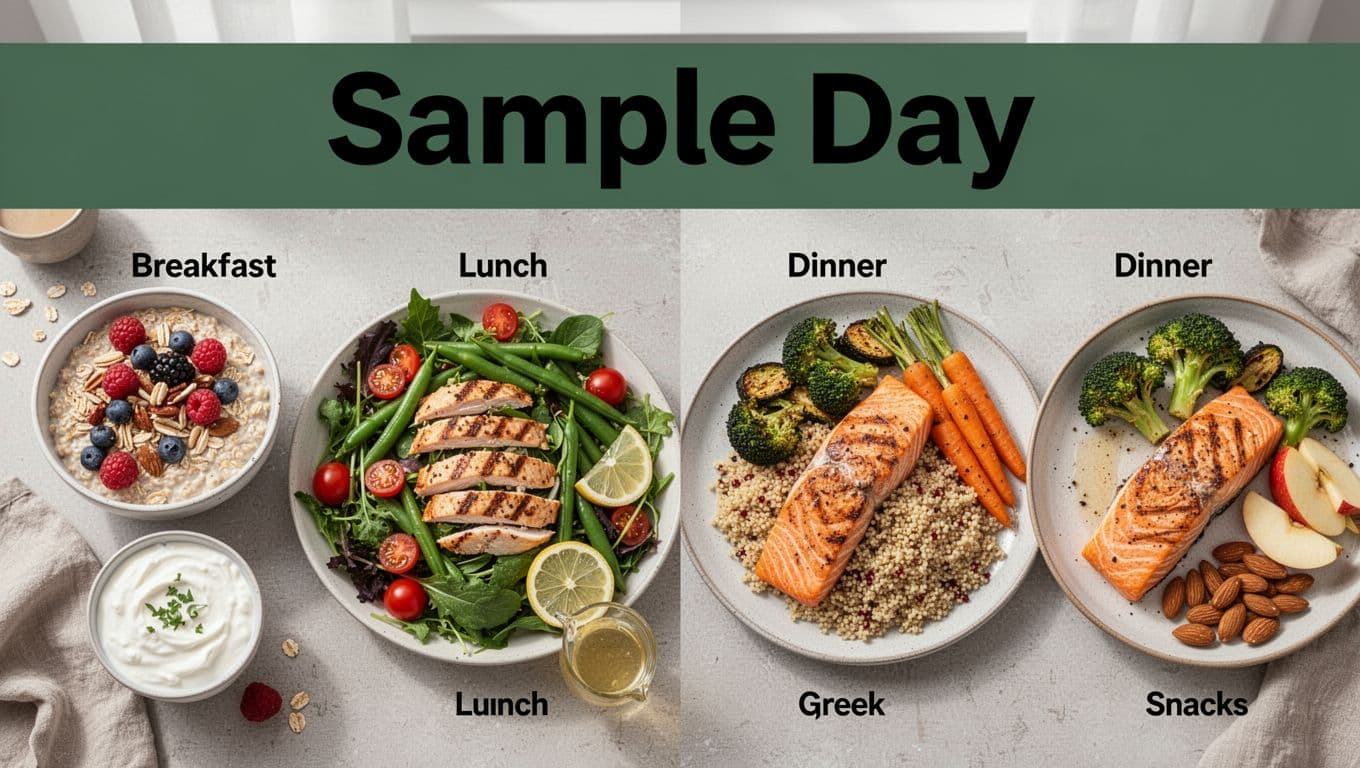
Want a “real life” example? Here’s a simple day that follows the plate model. It also keeps snacks balanced, so you don’t go from hungry to starving.
Breakfast (plate-based, filling, fiber-forward) Start with oats plus fruit. For example, bowl oats cooked with milk or fortified soy milk, then top with berries and a handful of nuts (or peanut butter) for protein and healthy fats. Add yogurt if you want extra staying power.
Why it works: oats and fruit bring fiber. Nuts or yogurt help slow digestion. As a result, your energy stays steadier.
Lunch (easy prep, high variety) Build a big salad with a protein base. Use mixed greens, add beans (black beans, chickpeas, or lentils), and include colorful add-ins like cherry tomatoes and shredded carrots. If you want meat, grilled chicken works too. Finish with a simple dressing, like olive oil plus lemon.
Why it works: half your lunch becomes produce, and the protein supports fullness.
Dinner (balanced plate, simple cooking) For dinner, keep it straightforward: salmon, quinoa, and roasted or steamed veggies. Choose broccoli, zucchini, bell peppers, or a mix of carrots and greens. Use olive oil, garlic, herbs, and a squeeze of lemon.
Why it works: protein plus a whole grain plus veggies gives you the “three-part balance” that makes meals feel complete.
Snacks (planned, not accidental) Pick one snack that includes both fiber and protein.
- Greek yogurt + apple slices
- Hummus + veggie sticks
- Handful of almonds + fruit
If you’re hungry between meals, don’t wait until you’re shaky. Have a snack that matches your plate goals, so dinner doesn’t turn into the main event.
For meal ideas and portion guidance you can revisit, check out MyPlate.gov | U.S. Department of Agriculture. It’s a good place to confirm what “balanced” looks like for different daily calorie needs.
Conclusion
A balanced diet means you eat a steady mix, so your body gets what it needs without overdoing the stuff that can spike cravings and energy crashes. Using the plate model you already know, aim for about half fruits and veggies, a quarter whole grains, and a quarter protein, plus healthy oils. When these parts show up together, you often feel better day to day, and your long-term health gets support.
Balance also helps you dodge common pitfalls. Instead of relying on refined carbs and missing fiber, you build meals that support steadier blood sugar, better weight control, and heart health. At the same time, cutting back on highly processed foods reduces the “more of the wrong things” pattern that adds stress to your routine.
If you want to make this real, try one balanced plate tomorrow. After that meal, pay attention to how you feel for a few hours, then repeat what works. Over time, these small, repeatable choices help you build vibrant health from the inside out. What would you like your energy level to feel like most days?