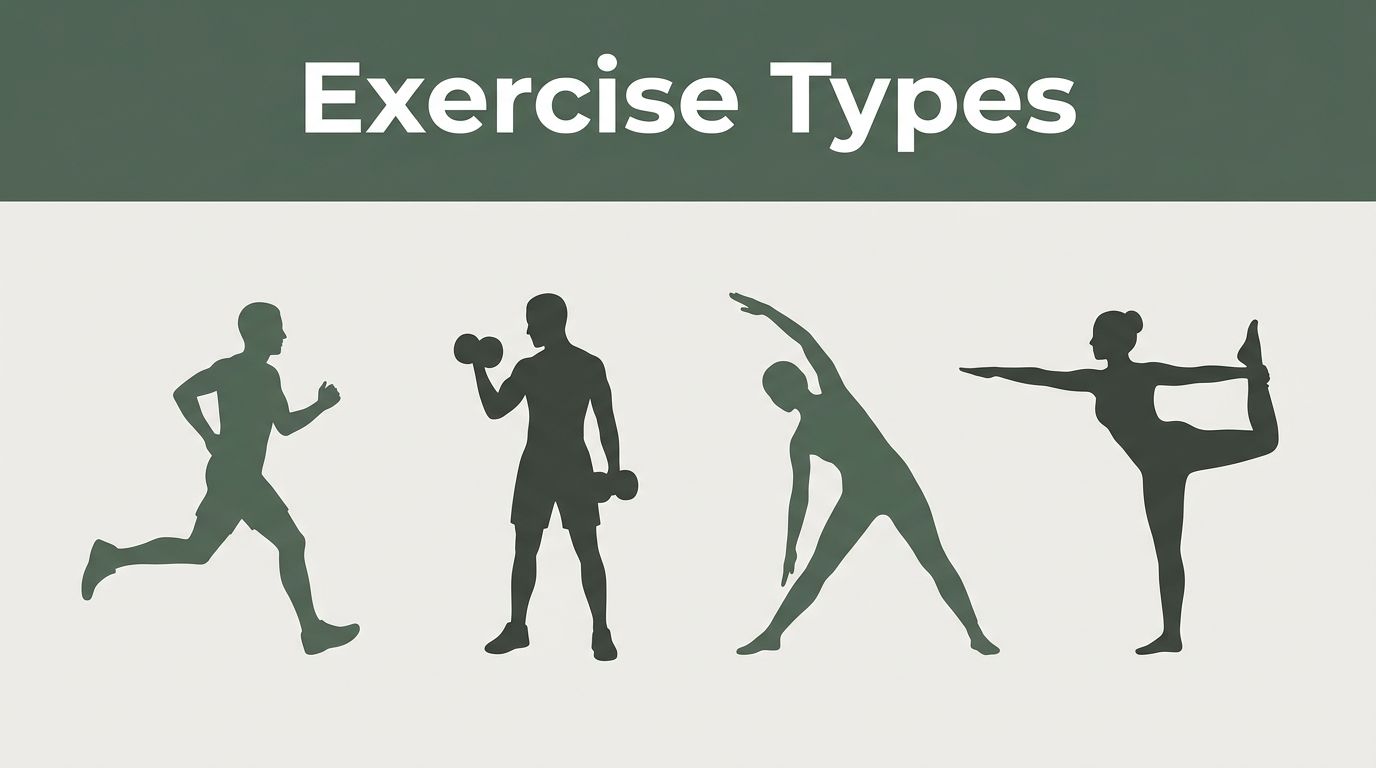
You know that slump where your body feels stuck, but your brain still wants a way out? A lot of people feel that way after work, school, or a tough week, then their mood lifts once they rotate simple different types of exercise. Health experts like the American College of Sports Medicine (ACSM) group movement into four main types: aerobic, resistance, flexibility, and neuromotor. Aerobic gets your heart and breathing going, resistance builds strength, flexibility keeps you moving well, and neuromotor sharpens balance and coordination. When you mix all four, you tend to feel more energy and steadier mood, because your body gets stronger and works more smoothly.
Next, let’s break down each type with easy definitions and everyday examples you can use right away.
Spotting Aerobic Workouts in Your Daily Life
Aerobic exercise is any activity that gets your heart and lungs working harder by using oxygen. Think of it like turning up the volume on your “engine.” You still move in a way you can sustain, but your breathing speeds up and your body feels warmer and more awake.
How to spot it fast (without overthinking)
A quick way to recognize aerobic work is the talk test. If you can speak in full sentences but you cannot comfortably sing, you’re in moderate intensity. If you can only say a few words before needing to breathe, you’re in vigorous intensity.
Here are easy places to look for aerobic work in real life:
- Stairs over elevators for your next errand or appointment
- Brisk walking during lunch, school drop-off, or after dinner
- Bike commuting instead of driving for short trips
- Jogging in short bursts when you have energy and time
- Swimming laps or doing a steady water-walk session
- Dancing at home or at a class for a full song-to-song rhythm
- Hiking on a trail that leaves you slightly out of breath
- Basketball or pick-up sports where you keep moving between plays
If you want a simple target, healthy adults are commonly advised to get at least 150 minutes per week of moderate aerobic activity, or 75 minutes of vigorous. You can also mix both, as long as the overall weekly goal adds up. For a clear overview, see ACSM’s Physical Activity Guidelines.
Make it stick with tiny starts
Most people quit because they start too big. So start smaller than you think you need. For example, try 10-minute walks and add a few minutes each week, or pair it with a routine you already do.
Here’s a beginner-friendly way to build momentum:
- Pick a time you already show up for, like right after breakfast.
- Walk at a pace where talking feels doable, not comfy.
- Track time only, not calories or pace, for now.
- Repeat tomorrow, even if it’s just 10 minutes again.
Consistency beats perfection. Your goal is to accumulate enough aerobic minutes to feel the shift.
If you like your plan grounded in trusted guidance, the World Health Organization’s physical activity facts summarize how regular movement supports long-term health.
Proven Wins from Regular Aerobic Sessions
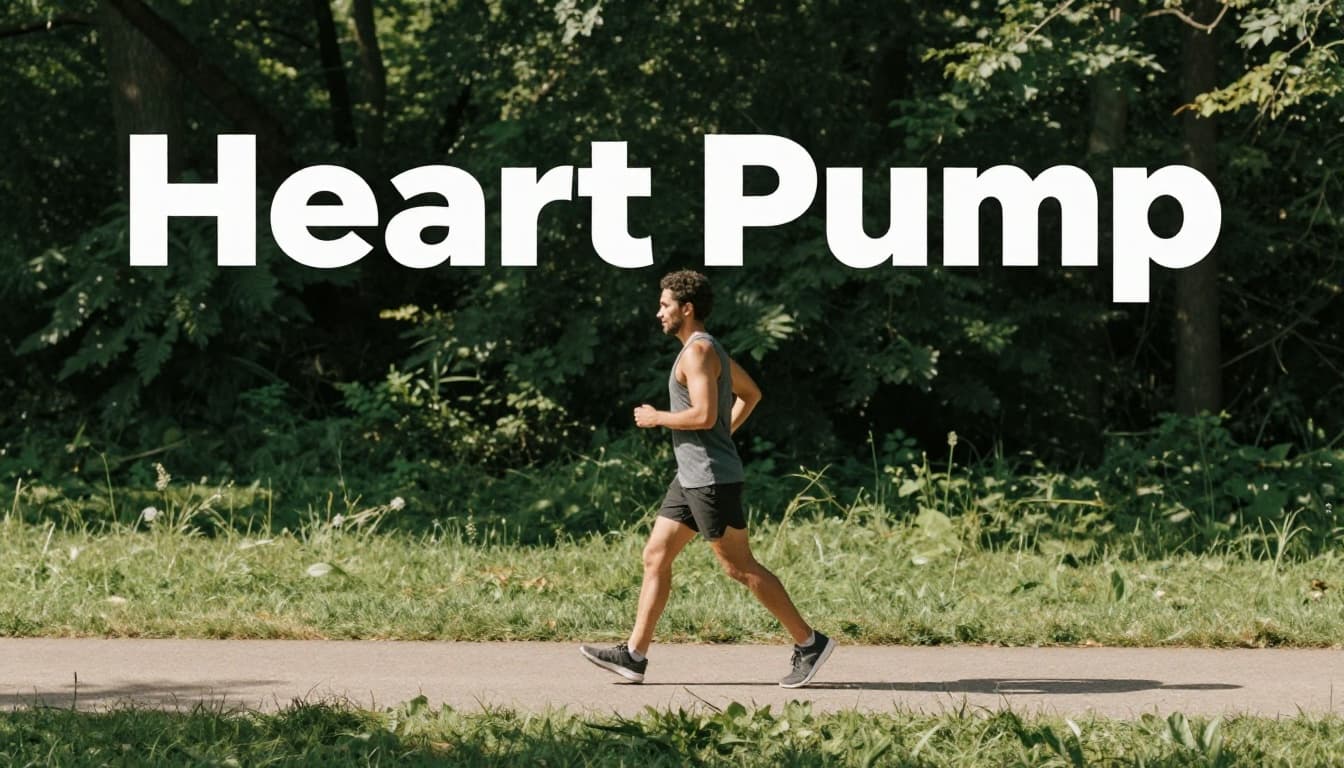
Once aerobic exercise becomes part of your week, the benefits show up in places you can feel right away. Your body starts acting less like a stuck machine and more like a well-oiled one. Then, over time, those small wins add up into real health protection.
Scenario 1: A busy parent who feels calmer
Imagine you’re juggling work, kids, and dinner plans. You feel wired but tired, and stress keeps creeping in. After a few weeks of regular aerobic sessions, you may notice you fall asleep easier, your stress spikes feel smaller, and your patience returns.
Aerobic exercise supports stress control because your body moves from “alarm mode” toward a steadier rhythm. In short, it helps your system settle down, even if your life doesn’t.
Scenario 2: An office worker fighting daily fatigue
Now picture an office worker who sits most of the day. After lunch, you feel heavy, foggy, and slow to focus. A brisk walk during breaks, or a short ride after work, can help you shake off that crash.
Why? Aerobic activity improves how your body handles energy needs. So you may feel less drained and more ready to finish the day. And when your breathing and circulation improve, everyday tasks often feel easier.
Scenario 3: Someone focused on weight and long-term health
Let’s say you’re trying to manage your weight without going to extremes. Aerobic exercise makes that job more realistic because it supports calorie balance and builds a routine you can maintain.
Most importantly, regular aerobic movement lowers long-term risk for major health problems. That includes heart disease and type 2 diabetes risk, especially when you pair exercise with steady sleep and smart food choices. For another trusted take on activity goals, the American Heart Association recommendations for adults align with the widely used weekly targets.
The big five benefits you can count on
Here are five wins most people notice over time:
- Stronger heart and better blood flow
- Weight management support
- Reduced stress and calmer mood
- Lower risk of diabetes and heart disease
- More daily stamina (less “I can’t” feeling)
If you want a quick mental image, think of aerobic exercise like getting fresh air into an old room. Your body breathes easier, moves better, and handles effort with less struggle.
So, where will you find your aerobic minutes today? Pick one habit from your day, then start with a pace you can talk through.
Resistance Training Builds Real Strength Without Fancy Equipment
Resistance training means you use weights, bands, or your own bodyweight to challenge your muscles. As a result, your body learns to produce force, not just “feel tired.” And the best part? You can do this with basic gear, or none at all.
Ready to feel stronger? Start with the mindset that strength is a skill. Like learning to swim, you get better by practicing the right moves often enough.
Resistance training also helps your body handle real life. That includes carrying groceries, climbing stairs, lifting kids, and getting out of a chair without a struggle. Think of it like upgrading your internal tools, so daily tasks feel smoother and more controlled.
How strength training sessions are usually structured
For healthy adults, a common starting target is training major muscle groups about 2 days per week. Many programs use rep ranges like 8 to 12 reps, because they work well for building function and muscle size over time.
You do not need a complicated routine. Pick a few moves, perform them with good form, then progress gradually. If you can’t do that yet, that is fine. Start with easier versions and build up.
Focus on control first. Speed comes later, once your form stays solid.
To keep you safe, use these simple form rules:
- Move through a range you can control.
- Keep your joints stacked (knees track over toes, shoulders stay stable).
- Stop a rep when your form breaks, not when you “feel destroyed.”
- Use a load you can manage with steady effort, not sloppy reps.
If you want a research-backed summary of what healthy adults should do, see ACSM’s resistance training guidance.
Easy Examples for Every Muscle Group
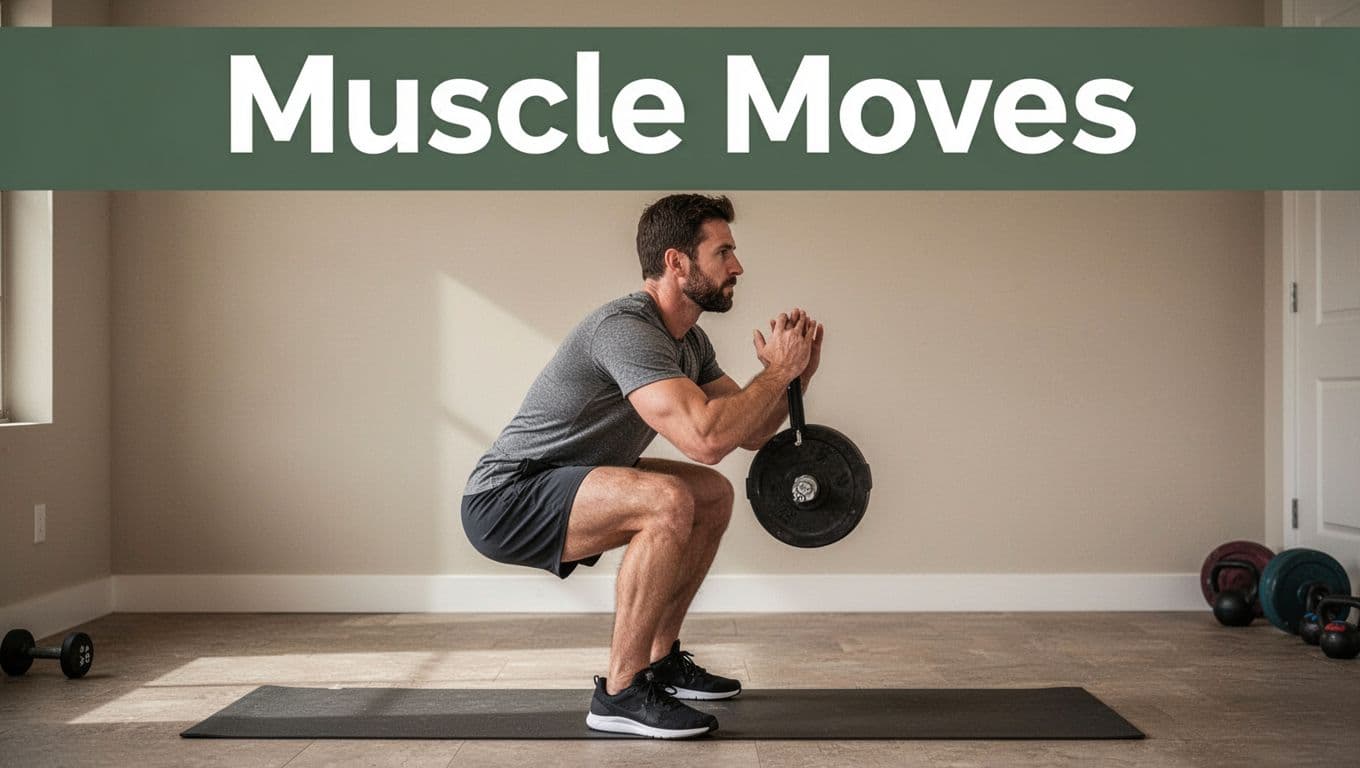
Here are simple resistance moves you can mix and match. Each option works your goal muscle group, and you can swap bodyweight, dumbbells, kettlebells, bands, or machines depending on what you have.
Chest
- Push-ups (bodyweight): Hands under shoulders, lower with control, press back up.
- Dumbbell press (free weights): Keep wrists stacked, touch weights lightly near mid-chest.
- Machine chest press (machine): Use a controlled descent, do not let shoulders shrug forward.
Back
- One-arm row (dumbbell or band): Pull elbow back, pause, then lower slowly.
- Seated cable row (machine): Keep chest proud, pull toward your ribs, avoid twisting.
- Inverted row (bodyweight): Use a sturdy bar, keep hips level, pull chest toward bar.
Legs
- Squats (bodyweight, dumbbell goblet, barbell, or machine): Sit back, keep knees tracking, stand tall.
- Split squats (bodyweight or dumbbells): Short step, stable front foot, control the drop.
- Glute bridge (bodyweight or band): Squeeze at the top, keep ribs down, lower slowly.
Arms
- Biceps curls (dumbbells, bands): Elbows stay near your sides, curl without rocking.
- Triceps dips or pushdowns (bodyweight or cable/band): Control the bend, keep shoulders safe.
- Overhead extension (dumbbell or band): Reach up, keep ribs pulled in.
Core
- Plank (bodyweight): Tighten glutes, brace abs, hold without sagging.
- Dead bug (bodyweight): Lower opposite arm and leg slowly, keep lower back down.
- Hollow hold or band anti-rotation (band): Press away, resist movement, keep breathing steady.
For each move, a common approach is 8 to 12 reps for 2 sets to start. If you struggle to get 8 with good form, lower the difficulty. If you breeze through 12 with perfect control, add a little weight next time.
How Strength Work Changes Your Body and Life
Strength training changes more than your muscles. Over time, it improves how your whole body moves, because your joints, tendons, and nerves learn to work together.
You might notice it first in small wins. For example, carrying bags may feel lighter. Stairs may feel less like a test. Even bending to tie shoes can feel smoother.
Also, your body becomes better at using energy. That can mean steadier weight control because you build and keep more lean mass. In other words, your body has more “active tissue,” and it tends to use energy more efficiently day to day.
Another big payoff is bone health. Resistance training creates stress on bones in a safe, controlled way. As a result, bones respond and adapt. This matters for aging, because bone changes often start long before you feel “old.”
Then there is the simple life impact people talk about:
- Your posture improves because back and core work support you.
- Your balance improves because legs and hips get stronger and more responsive.
- Your confidence rises because you can do more, with less worry.
Ready to feel it in your routine? Start with a beginner-friendly plan at home, then repeat it consistently. A basic week could look like this:
- Day 1: Squats, rows, push-ups, plank
- Day 2: Split squats, lat-style rows, overhead triceps, dead bug
Choose weights or band tension that make the last reps feel challenging, but still clean. If you want to check the bigger picture on consistency and safety, you can also review ACSM’s updated resistance training guidelines.
Real strength shows up when life gets physical. Grocery runs, errands, and stairs count.
Flexibility Training: Stretch to Move Freely and Stay Injury-Free
Flexibility training means stretching your muscles and tendons to improve your joint range. When you stretch the right way, your body moves with less stiffness, and daily tasks feel easier.
Think of your joints like door hinges. If they never get a little “oil” (movement and gentle stretching), they start to feel gritty. Flexibility keeps things smooth, and it can also help you stay injury-free when you lift, run, or just chase your day.
Most healthy adults do flexibility work 2 to 3 days per week. A simple session can take 10 minutes, and it feels good fast. You can keep it gentle and steady, too, because you only need to reach mild tension, not pain.
Also, not all stretching is the same. Static stretching means holding one position, usually after warm-up. Dynamic stretching means gentle movement through range, like leg swings, and it works well before activity.
For a grounded, feel-good routine, pair deep breathing with calm holds. Relax your face, drop your shoulders, and let your body settle into the stretch. Over time, you’ll likely notice better posture, less tightness, and smoother movement.
If you want a trusted guideline-style overview, see ACSM’s flexibility guidance update. It aligns with the common approach of frequent, gentle stretching.
Simple Stretches You Can Do Anywhere
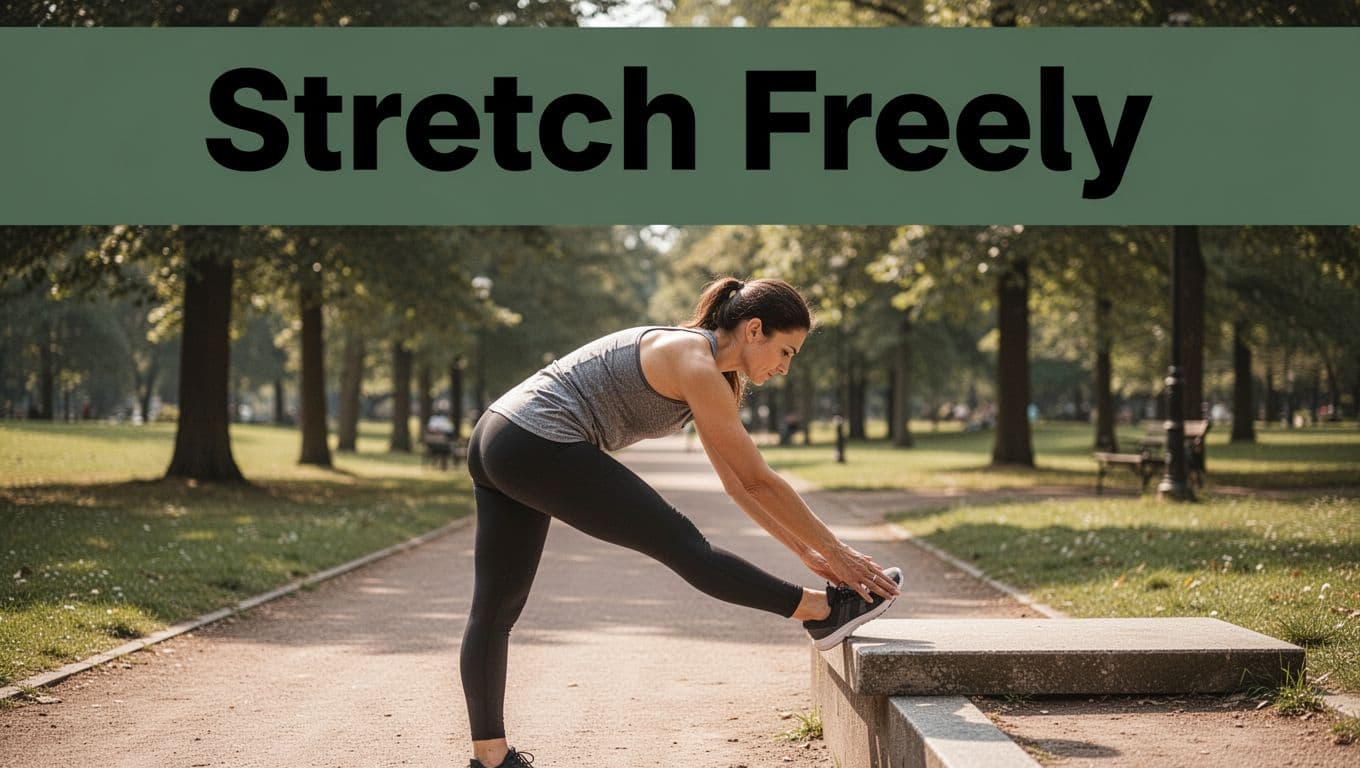
You don’t need a yoga mat gym, or special gear. You just need a bit of space, steady breathing, and a willingness to go slow. When you stretch, aim for 10 to 30 seconds per hold. Then repeat if it still feels tight.
Here are 6 targeted stretches you can do at home, at your desk, or right before bed:
- Hamstring stretch (standing or seated): Hold 20 to 30 seconds each side. Inhale to prepare, then exhale as you hinge forward.
- Quad stretch (standing): Hold 20 to 30 seconds each side. Breathe in, then breathe out while you pull your heel toward your seat.
- Calf stretch (wall or step): Hold 20 to 30 seconds each side. Exhale as you press the heel down, keep the knee steady.
- Shoulder rolls: Do 2 sets of 8 to 10 slow rolls. Breathe through the motion, keep your neck relaxed.
- Chest stretch (doorway or wall): Hold 20 to 30 seconds. Inhale wide through your ribs, then exhale and gently open your chest.
- Hip flexor stretch (half-kneel): Hold 20 to 30 seconds each side. Exhale and tuck your pelvis slightly to feel the front hip stretch.
Stay in the “tension zone,” not the “pain zone.” If it hurts sharply, back off right away.
For best results, do these after you warm up a little. Even 3 to 5 minutes of easy walking helps. Then finish with slow breathing, like you’re telling your muscles, “We’re safe. We can relax now.”
If you’re consistent, your range tends to improve. Plus, you’ll often feel less stiff when you stand up, bend down, or reach overhead. That’s the point of flexibility training, movement that feels natural again.
Neuromotor Exercises: Sharpen Balance and Coordination for Confident Moves
Neuromotor exercises train your body and brain to work together. In simple terms, they help you control your balance, coordinate your steps, and move with smoother timing.
Think of your nervous system like an internal conductor. When it’s dialed in, your muscles respond faster, your posture stays steadier, and your body feels “organized” instead of wobbly. That matters because everyday life is full of little balance challenges, like turning in a hallway, stepping off a curb, or reaching while you shift your weight.
For many people, this is the missing link between strength and feeling stable. You can have strong legs, but if your body does not coordinate the next step well, you still feel unsure. Neuromotor training fixes that by practicing control, reaction, and body awareness.
ACSM points out that functional skills like balance and agility should show up at least 2 days per week, alongside other exercise types. If you want a guide for what this looks like in real life, you can also review ACSM’s position stand on neuromotor fitness.
Most importantly, balance and coordination work supports aging well. It can improve stability for older adults and lower fall risk when practiced regularly. Research on sensorimotor programs also supports the idea that training balance and proprioception can improve functional mobility and fall risk outcomes, not just “test scores” (see sensorimotor training trial results).
So, let’s make this practical. Here are fun, beginner-friendly drills you can try today.
Fun Drills to Boost Your Stability
You do not need fancy tools. Most drills use simple balance positions, slow footwork, or gentle challenges you can progress over time. Start with a “safe setup,” like standing near a counter or wall, so you can steady yourself without panic.
Here are 6 beginner drills, each with clear steps:
- Tree Pose (easy balance)
- Stand tall and shift your weight onto one leg.
- Place the other foot low on your ankle or inner calf (avoid high placements at first).
- Keep your hands at your sides or lightly touch a wall.
- Hold for 10 to 20 seconds, then switch legs.
- Heel-to-Toe Walk (line walking)
- Find a straight line, like tape on the floor.
- Place your heel so it touches the toes of the opposite foot.
- Walk slowly, keep your eyes forward, and stay tall.
- Do 10 steps, rest, then repeat.
- Single-Leg Stand with Head Turns
- Stand near a wall for support.
- Lift one foot slightly off the floor (or lightly tap if needed).
- Keep balance and slowly turn your head left, then right.
- Repeat for 30 to 45 seconds total, then switch sides.
- Toe Taps (controlled coordination)
- Stand tall with light hand support nearby.
- Tap the top of one foot forward, then back to the starting spot.
- Keep your hips level and avoid leaning.
- Do 2 sets of 10 taps per side, moving slowly at first.
- Marching in Place with Tall Posture
- Stand with feet hip-width apart.
- March slowly, lifting one knee at a time while keeping your torso steady.
- Add a pause each step, like you’re placing a careful foot on a moving train.
- Do 30 to 60 seconds, then rest.
- Gait Practice: Walk and Stop on Cue
- Walk at a comfortable pace in an open area.
- Every few steps, stop instantly and hold your balance for 3 seconds.
- Restart and repeat, keeping steps smooth instead of rushing.
- Do 5 to 8 stop cycles.
Start easy, then progress. If you feel wobbly, shorten your hold or reduce your range.
If you want a simple way to “level up” without getting overwhelmed, use the same drills but change one thing at a time: less hand support, slower tempo, longer holds, or a softer surface. For example, once heel-to-toe walks feel steady on the floor, you can try them with your eyes focused on one spot.
Also, try pairing balance with something everyday. Add a light reach, carry a small object, or practice stopping while you look around. That combination helps your body learn real-world control, not just perfect test-day balance.
Mix Exercise Types for a Balanced Routine That Fits Your Life
When you mix the four exercise types, you stop chasing “one perfect workout.” Instead, you build a routine that covers your needs every week. Aerobic work helps your heart handle daily effort. Strength work gives you the power for real tasks. Flexibility keeps joints moving well. Neuromotor training improves balance and coordination, so you feel steady.
That mix also makes health goals easier. For example, research and expert guidance often show that pairing aerobic and strength work does more together than either one alone, especially for heart and metabolic health. If you want a simple baseline, WHO guidance centers on 150 minutes per week of moderate aerobic activity plus muscle-strengthening on 2 days.
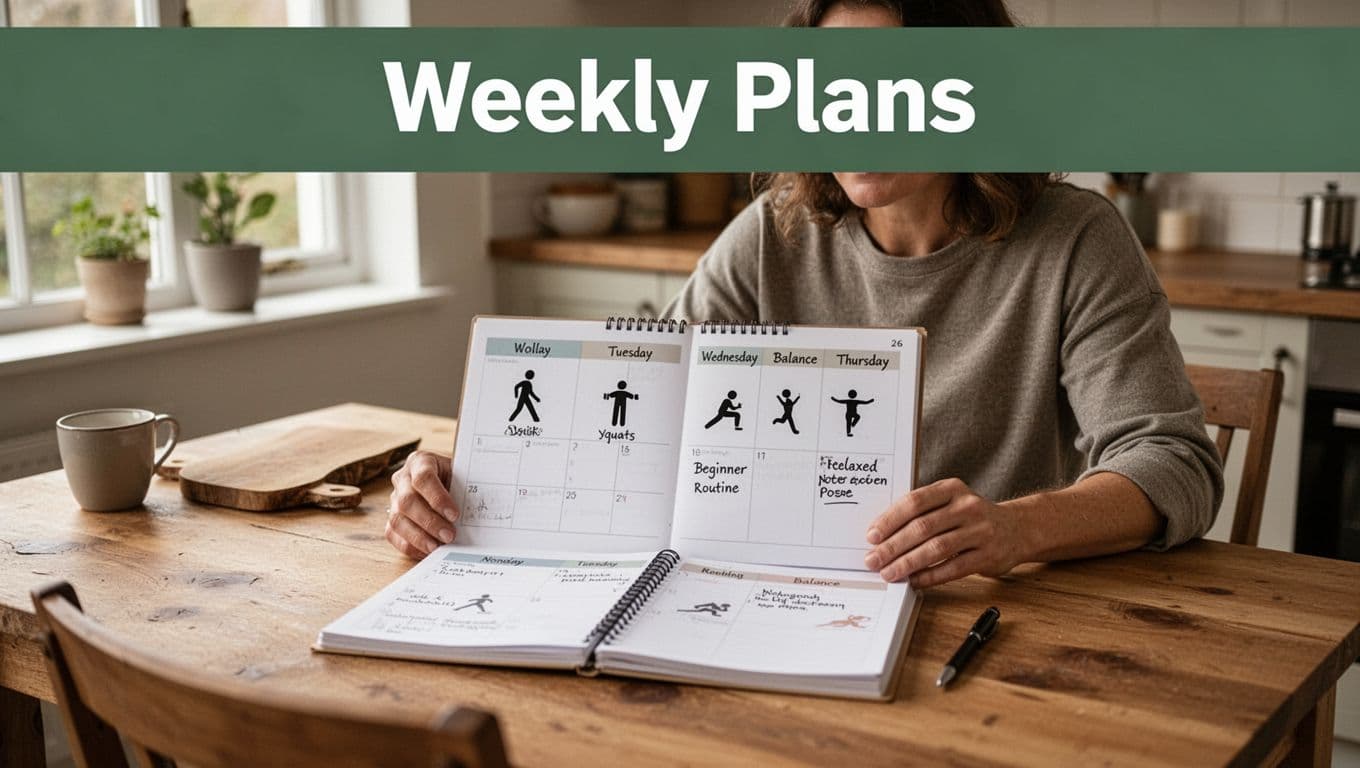
Sample Weekly Plans for Busy Schedules
Busy schedules don’t need complicated workouts. Think of your week like a puzzle with four pieces. Each day has a job, and you rotate pieces so you stay balanced.
Also, 2026 trends still support short HIIT bursts. You do not need long sessions. Most people do best with brief hard intervals one or two times per week, then keep the rest of the week steady and easy to repeat. Mobile apps help too, because they can adjust reps and timing to your level (for example, AI personalized workout plans).
Here are three customizable weekly routines you can start today:
- Beginner (about 15–30 minutes most days)
- Mon: Aerobic walk (10–20 min, easy to moderate)
- Tue: Strength bodyweight (20–25 min, full body)
- Wed: Flexibility yoga (10–15 min, gentle holds)
- Thu: Neuromotor balance drills (10–15 min)
- Fri: Aerobic walk (10–20 min)
- Sat: Optional light mobility or easy walk (10–20 min)
- Sun: Rest
- Intermediate (about 30–45 minutes, includes brief HIIT)
- Mon: Aerobic + short intervals (25–35 min total)
- Tue: Strength circuit (30–40 min)
- Wed: Flexibility + core control (20–25 min)
- Thu: Neuromotor (balance plus slow step drills, 15–25 min)
- Fri: Aerobic steady day (30–40 min)
- Sat: Strength focus (25–40 min)
- Sun: Recovery walk or mobility (15–25 min)
- Senior-friendly (low impact, joint-friendly pacing)
- Mon: Chair or supported walk (10–20 min)
- Tue: Strength basics (15–25 min, slow reps)
- Wed: Mobility and stretching (10–20 min)
- Thu: Balance practice (10–15 min near support)
- Fri: Easy aerobic (10–20 min)
- Sat: Strength “maintenance” session (15–25 min)
- Sun: Rest
Start small, then build. If you miss a day, your next workout still counts. For the baseline framework behind these targets, see WHO physical activity and sedentary behavior guidance.
Conclusion: Use the Four Types of Exercise Explained Simply
Aerobic exercise pumps your heart and helps you breathe harder, so you feel more awake and steady. Resistance training builds strength by working muscles against force, which makes daily tasks feel easier. Flexibility improves how well you move, and neuromotor exercises sharpen balance and coordination for confident, safe steps. Put simply, the best way to cover the bases is to rotate these types of exercise explained simply across your week.
Now pick your next move. Choose just one type today, then plan a small session you can actually repeat this week. If you want a quick start, go with what feels most doable, then add time or effort only after you feel good doing it.
What’s your favorite exercise right now, aerobic, strength, flexibility, or neuromotor? Share it in the comments, try a simple routine this week, and subscribe for more practical tips. When you stay consistent, you keep building long-term health wins, stronger days, and a body that works better for years.