If you skip workouts, do you feel guilty. If you go too hard, do you burn out. You’re not alone. Online advice can feel endless, and it’s hard to know what actually matters.
Here’s the simple truth from current guidance used in the U.S. and around the world: most adults should aim for at least 150 minutes of moderate aerobic activity each week, plus muscle-strengthening on 2 or more days. That combo gives real health benefits without requiring a perfect routine.
So what should that look like in real life, and how do you stick with it when your calendar is packed? Let’s map out what to do, week by week.
What Health Experts Recommend for Your Weekly Workout
Most recommendations boil down to two buckets: aerobic exercise (for your heart and lungs) and muscle strengthening (for strength, function, and long-term mobility).
The CDC summarizes the weekly targets in its Physical Activity Guidelines, including aerobic minutes and the strength days you should add each week (CDC physical activity guidelines). WHO’s recommendations align closely, too, especially for the adult minimum. (WHO physical activity recommendations)
Here’s the weekly structure in plain terms:
| Weekly goal | What to do | Easy examples |
|---|---|---|
| 150 minutes moderate (or 75 vigorous) | Aerobic activity that makes you breathe harder | Brisk walking, biking, swimming |
| 2+ strength days | Train major muscle groups | Squats, push-ups, rows, bands |
Importantly, you don’t need to do it all at once. You can split it across the week and still count it.
The minimum works best when it’s consistent, not when it’s intense for one day.
Also, “moderate” has a feel. You should be able to talk, but you can’t sing.
Breaking Down Aerobic Exercise: Heart-Pumping Basics
Aerobic exercise is movement that keeps your heart rate up for a while. It includes activities like walking, jogging, cycling, and swimming. The key is intensity, meaning how hard your body has to work.
A simple way to sort it out:
- Moderate intensity: you can talk in short sentences, but you’re breathing harder
- Vigorous intensity: talking feels difficult, and you can’t say much
For example, brisk walking usually lands in the moderate zone. Running often lands in the vigorous zone.
If you want a quick rule for your week, think of it like “time on your feet.” With moderate activity, 150 minutes breaks down into something like 30 minutes, 5 days. With vigorous activity, 75 minutes breaks down into 25 minutes, 3 days.
Some people ask, “Do I have to hit exactly 150?” No. Even if you start below that, any aerobic work helps. In fact, the CDC points out that some physical activity is better than none and encourages adults to build gradually (Adding physical activity as an adult).
You can also track it in a low-tech way. Use your phone timer. Or use a wearable if you have one. What matters most is how you feel during the activity and that you keep showing up.
One more note: studies suggest there’s a “dose-response” effect. More movement tends to mean more benefit. Still, the 150-minute target is a solid starting point for most adults.
Muscle-Strengthening: Build Power Without the Gym Hype
Aerobic minutes help your heart and lungs. But strength training helps you move well in daily life. It also supports long-term bone health and muscle mass as you age.
When experts say “muscle strengthening,” they mean working major muscle groups. That includes your legs, hips, back, abs, chest, shoulders, and arms.
You only need 2 or more days per week, and each session can be short. You don’t have to train to failure. You don’t need fancy splits. You just need enough effort that the muscles work.
This is where bodyweight shines for busy people. Push-ups can work your chest and arms. Squats can work your legs. Lunges train your hips and thighs. Rows can train your back using resistance bands.
If you’re new or getting back into it, start with a simple full-body approach. Train each major muscle group across your two strength days. Then repeat weekly.
The goal is not to ruin your week. The goal is to build a habit you can keep.
Real Ways to Fit 150 Minutes Into Your Busy Week
Here’s the part that makes it easier: you don’t need one perfect plan. You need a plan that matches your real schedule.
A good week has two ingredients:
- Aerobic time you can repeat
- Strength sessions you can recover from
Most people do best when they split aerobic work into smaller chunks. For instance, 30 minutes a day is easier than trying to “make it up” on Saturday.
Also, enjoy matters. If you hate your plan, you won’t stay with it.
One helpful mindset is this: your week is like a budget. You can spend small amounts often, and you still reach your yearly goals.
Plan 1: Walk Your Way to Fitness
This plan is simple, low cost, and easy on most joints.
- 5 days of 30-minute brisk walks
- 2 days of full-body strength (about 20 to 30 minutes)
Brisk walking counts as moderate aerobic activity. You can adjust the pace. If you can talk in short sentences, you’re in the right zone.
For strength days, keep it full-body:
- Squats (or sit-to-stands)
- Push-ups (wall or floor)
- Rows with bands (or a supported row)
- Core moves like dead bugs or planks
If you feel tight at first, that’s normal. Just reduce the difficulty for a couple weeks. Consistency comes before intensity.
Plan 2: Add Some Jogging for Efficiency
Want faster results with less time? Try a mix of walking and jogging.
- 3 days of 25 minutes jogging (or a run-walk blend)
- 2 days of 20 to 25 minutes walking
- 2 days of strength
If running feels too hard right now, do this instead. Jog for 1 minute, walk for 2 minutes. Repeat for 20 to 25 minutes. Over time, add a little more jogging.
This plan still aims for your weekly aerobic total. It just helps you get there with fewer minutes of pure walking.
Plan 3: Mix It Up for Fun
Not everyone enjoys the same activity every day. If variety keeps you moving, use it.
- 2 to 3 days biking or swimming (moderate effort)
- 1 to 2 days brisk walking
- 2 days strength training
For example, you might bike on Tuesday and Thursday, then swim on Saturday. Add walking on Monday and strength on Wednesday and Sunday.
If you do more than one activity, you reduce boredom. Then you’re more likely to hit the weekly minutes.
And if you’re starting from sedentary life, begin smaller. Try 10 minutes at a time. Build up by 5 minutes each week. That approach tends to stick.
The 2026 ACSM Update on Smart Strength Training
Strength training has changed in one important way. It’s less about “perfect programs” and more about doing something you can repeat.
In March 2026, ACSM published an updated resistance training position stand. It focused on strength training for healthy adults, based on a review of 137 systematic reviews covering more than 30,000 participants.
The main theme is simple: consistency beats complexity. In other words, you don’t need a complicated plan to get stronger. ACSM’s update is summarized in its 2026 announcement (ACSM 2026 resistance training update).
It also supports a practical message:
- Any resistance helps when it’s done regularly
- Bodyweight and bands count, not just machines
- You can skip the “fancy” routines if they slow you down
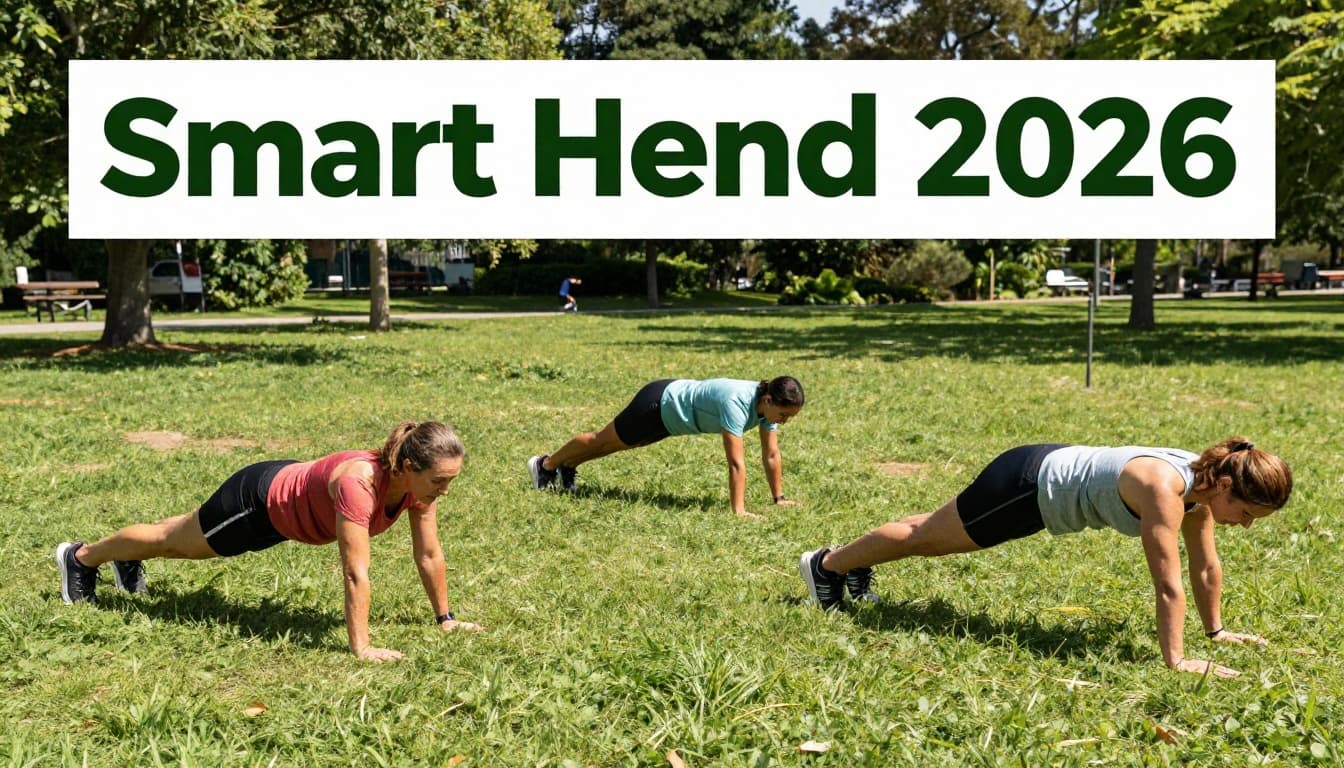
Another key point: train all major muscle groups at least 2 days per week. You can spread that work across two full-body days, or across a small split. Either way, you want coverage of legs, hips, back, chest, shoulders, arms, and core.
If you’re coming from zero, the biggest win is starting. Next comes staying with it. Once that habit forms, you can add small improvements.
The “smart” part is not doing more things. It’s doing the right things, in a way that fits your life.
Why Simple Wins Over Complicated Routines
Complicated routines sound motivating at first. Then they fade when life gets busy.
Simple routines work because they’re repeatable. You don’t need to change your plan every week. You also don’t need to switch equipment to “keep it fresh.”
Here’s a more realistic rule: pick 4 to 6 exercises. Train them twice per week. Then add a bit more effort over time, like one extra rep or a slightly harder band.
You can even keep your sessions short. A focused 20 to 30 minutes is plenty for most people.
Big Health Boosts from Just This Much Movement
When you hit the weekly minimum, you’re not chasing hype. You’re stacking benefits that show up in real life.
Here are some of the strongest outcomes tied to regular physical activity and the aerobic plus strength combo:
- Better heart health (lower risk of heart disease over time)
- Stronger muscles and bones (helps you stay functional)
- Improved mood and less stress (movement supports mental health)
- Better blood pressure and healthier weight support
- Lower risk for several chronic diseases
The CDC summarizes these benefits clearly for adults, including immediate and long-term effects (CDC health benefits for adults). One key point is that even a single session of moderate activity can help, but regular activity drives bigger results.
Also, you don’t need to be an athlete. Guidelines apply to adults of many ages and fitness levels. That said, if you have heart disease, uncontrolled blood pressure, or joint problems, talk with a clinician. You may need to modify your plan.
When you follow the basics, your body gets the message every week: move, strengthen, recover, repeat.

Conclusion: Pick a Weekly Target You Can Actually Keep
The answer to “How much exercise do I really need?” is steady and doable: 150 minutes of moderate aerobic activity each week, plus strength training on 2 or more days. That combo matches current guidance, and it supports major health benefits.
The 2026 ACSM update reinforces a simple idea. Consistency matters more than perfection. Start with a plan that feels manageable, then build from there.
Now choose one plan from above, and try it for two weeks. What’s your next move going to be, a brisk walk, a jog-walk mix, or two strength days at home?