
The first time you try to work out, your brain can act like it’s planning a disaster. It tells you you’ll mess up, get hurt, or quit by lunch.
That fear is normal. Just ask the friend who started with a slow 10-minute walk and then felt proud all afternoon. By the end of that week, sleep felt easier, energy felt steadier, and daily tasks felt less heavy.
If you’re trying to start exercising if you’ve never done it before, the goal is simple: build confidence with small wins. This matters even more in 2026, when home workouts are easier than ever (short sessions, no gear, and lots of guidance).
In the sections ahead, you’ll build a beginner mindset, pick a doable exercise plan, avoid the most common routine mistakes, and track progress in a way that keeps you going. Let’s turn that first step into a habit.
Build a Beginner Mindset That Sticks From Day One
When you’re new, you don’t need to “go hard.” You need to show up. Mindset matters more than the workout itself because your attitude decides whether you return tomorrow.
Here’s why. Your body learns movement through repetition, not punishment. So if you start too big, you’ll feel sore, lose motivation, and fall behind. On the other hand, if you start small, you’ll build trust with yourself. That’s where long-term habits grow.
Also, perfection is a trap. You don’t need every rep to be flawless. You just need each session to move you forward a little. Think of it like learning to drive. You start slow, you practice, and then control improves.
Your job is to create a plan that you can stick to, even on busy days. That means setting realistic goals, giving yourself patience, and crediting progress that doesn’t always look impressive at first.
Try these beginner mindset moves:
- Pick a personal win: Choose one outcome you care about, like “more energy” or “less stiffness.”
- Start smaller than you think: Ten minutes counts. So does two sets instead of three.
- Commit to the routine, not the hype: Same day, same time when possible.
- Have fun on purpose: Choose movements you can actually enjoy.
- Track “showing up”: Consistency beats intensity for your first month.
If you want reassurance that bodyweight basics work, check bodyweight exercises for beginners. It breaks down simple moves in a way that matches how most beginners improve.
Most importantly, don’t wait for motivation. Make a plan, then let momentum do the rest.
Set One or Two Goals That Feel Doable Right Now
A smart goal keeps you calm. It also helps you know what to do when life gets busy.
Start with one or two goals that fit your real schedule. Use a “small and specific” style, not a vague promise.
Examples you can actually keep:
- Walk 10 minutes daily, 5 days per week.
- Bodyweight squats 3 times per week, with 2 sets of 8 reps.
- Plank practice 3 days per week, working toward 20 to 30 seconds.
Keep the measurements simple. “Minutes” and “reps” are easy. Also, choose a goal that won’t make you dread the next session.
If you’re nervous, set your goal even lower than you think you can do. You can always build after you finish the first week.
Choose Activities You Actually Like to Stay Excited
If you hate your workout, you won’t stick with it. So stress “fun” over “fancy.”
Choose activities that match your personality:
- Walking if you like fresh air and easy starts.
- Dancing if you want rhythm and joy.
- Cycling if your legs feel best with steady motion.
- Strength basics at home if you prefer privacy and control.
In 2026, many beginners are choosing short home sessions because they remove barriers. No commute, no “what should I do today?” stress, and less pressure.
Your best workout is the one you’ll repeat. So pick a few options and test them. Then keep the one that makes you feel good afterward.
Master These No-Equipment Exercises for Quick Wins
Your first workouts should feel like “I can do this,” not “I’m failing.”
No-equipment training works because it uses your own body as resistance. You build strength through controlled moves: squats for legs, pushups for upper body, and planks for core.
For beginners, a common starting target is 2 to 3 sets of 8 to 12 reps for strength moves. If a move feels too hard, use an easier version. If it feels too easy, slow down and focus on form.
Here’s the key: quality first. Move with control. Stop before your form breaks. When in doubt, do fewer reps and keep your technique clean.
Perfect Your Squat Form for Stronger Legs and Hips
Squats are a beginner superpower. They help your legs handle stairs, get up from chairs, and carry groceries.
Follow this simple form guide:
- Stand with feet shoulder-width apart. Keep your toes slightly turned out.
- Brace your core like someone’s about to poke your stomach.
- Chest stays up and your back stays tall.
- Lower down by bending at hips and knees.
- Keep your knees tracking over your toes.
- Press through your heels to rise back up.
For a smooth start, try a range that feels safe. Your thighs do not have to hit perfect depth on day one. Also, if you feel wobbly, hold onto a sturdy chair lightly for balance.
- Sets and reps: 2 to 3 sets of 8 to 12
- How it should feel: effort in legs, not sharp pain
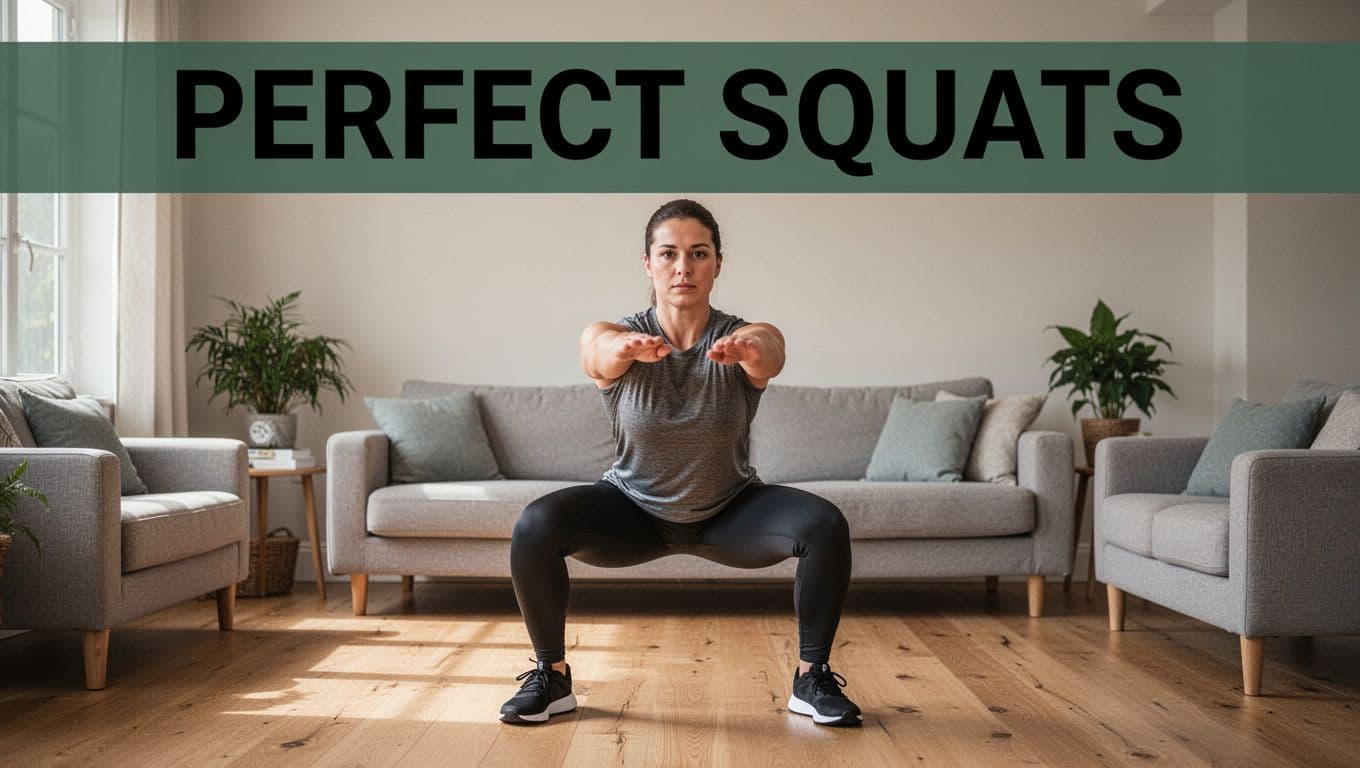
If you want a simple variation, use chair squats. Sit lightly, then stand up with control. It teaches the pattern without forcing deep range.
Nail Pushups and Planks for Upper Body Power
Pushups and planks build a strong upper body and a steady core. Together, they help your posture and reduce “stuck” feelings in your back.
Incline pushups are the easiest entry point. Use a countertop, couch, or sturdy bench.
How to do incline pushups:
- Place hands on a stable surface, a little wider than shoulder width.
- Step your feet back so your body forms a straight line.
- Tighten your core and keep your neck neutral.
- Lower your chest toward the surface.
- Press back up with controlled speed.
- Sets and reps: 2 to 3 sets of 8 to 12
- Common fix: slow down, then shorten the range slightly if needed
Now add planks for core stability:
- Start on forearms (or hands if you prefer).
- Set your elbows under shoulders.
- Lift knees off the floor.
- Keep your body in a straight line from head to heels.
- Breathe steadily while you hold.
- Hold time: 15 to 30 seconds at first
- Sets: 2 to 3 rounds
A good plank feels like steady work. It should not cause back pain. If your hips sag, drop to your knees and shorten the hold.
Craft a 3-Day Weekly Routine That Fits Busy Schedules
Consistency wins. That’s why a simple 3-day plan works so well for beginners. You train full body three times per week, with easy recovery built in.
This is also aligned with 2026 trends. Many people prefer short home workouts that feel doable, even on weekdays. You’ll get results from repeat visits, not marathon sessions.
Here’s a beginner-friendly setup:
- Monday: full body strength + short walk
- Wednesday: full body strength + short walk
- Friday: full body strength + short walk
- Tuesday and Thursday: light mobility or yoga-style stretching
- Weekends: rest, or easy movement if you feel like it
If you want more ideas for home workouts that suit beginners in 2026, see best home workouts for beginners in 2026.
A sample routine you can repeat for 3 to 4 weeks
Keep it simple. Choose one option for pushups, one option for squats, and one core move.
Here’s a clean example:
To set context, use this as your “Week 1 start point,” then adjust reps after you feel how your body responds.
| Day | Warm-up (5-10 min) | Strength (pick 2-3 moves) | Cool-down (3-5 min) |
|---|---|---|---|
| Monday | Easy walk + arm swings | Squats, incline pushups, plank | Hamstring stretch + light breathing |
| Wednesday | March in place + hip circles | Squats, hip thrusts, plank | Calf stretch + gentle back stretch |
| Friday | Easy marching + shoulder rolls | Chair squats, pushups (easier), hip hinge or deadlift (light) | Full-body stretch, slow breaths |
A quick note: hip thrusts and light deadlifts can come later if you feel ready. If not, stick to squats, pushups, and planks for a few weeks.
Then, progress in small ways:
- Add one extra set if you recover well
- Add two reps per set if form stays solid
- Add 5 minutes to your walk if energy is good
Warm Up Cool Down to Stay Safe Every Time
Warmups don’t have to be fancy. They just wake up your muscles and joints, so your body moves smoother.
Try this warm-up:
- 2 minutes easy walk or march
- 1 minute dynamic moves (arm swings, hip circles)
- 1 set of your first exercise at half effort
Then cool down after. Keep it gentle:
- slow walk or marching for 1 to 2 minutes
- light stretching for calves, hips, and chest
- calm breathing to help your heart rate settle
When you skip these steps, beginners often feel extra stiff or sore. With a short warm-up and cool-down, you’ll feel more in control.
Sidestep Beginner Traps to Avoid Burnout and Injury
Most people don’t fail because they’re “not built for fitness.” They fail because they do too much, too soon.
So watch for common traps. Then fix them early, before they turn into a reason to quit.
Start by keeping your effort in the “challenging but doable” zone. You should feel worked, not wrecked.
Here are the traps to avoid:
- Doing too much on day one: Start with 10 to 20 minutes, then build.
- Skipping rest days: Recovery helps you improve. Your muscles adapt while you rest.
- Repeating the same exact routine forever: Your body adapts. Change one variable every few weeks.
- Ignoring pain signals: Normal muscle tiredness is fine. Sharp pain is not.
- Training with sloppy form: When form breaks, the workout stops being useful.
- Only doing cardio or only doing strength: A mix supports energy and body control.
If you want a broader list of common beginner mistakes, review gym mistakes beginners make. It’s a useful reminder that small errors can slow progress.
Also, if you ever feel unsure, get help. Ask gym staff for quick form tips, or ask a trainer for a first check. A little guidance can prevent weeks of frustration.
Finally, remember that confidence grows through safe reps. You’re building a foundation, not winning a contest.
Spot Real Pain Versus Normal Muscle Tiredness
This is one of the most important skills you can learn.
Normal tiredness feels like muscle effort. You might feel burn or soreness in trained areas. It usually shows up during the workout or later that day.
Real pain feels different. Stop if you notice:
- dizziness or nausea
- sharp pain in a joint
- numbness or tingling
- shortness of breath that feels unusual
- pain that gets worse as you keep going
If something feels off, pause. Then switch to a safer option. For example, if pushups hurt your wrists, use incline pushups at a higher surface.
Your body gives feedback for a reason. Listening keeps you training longer.
Track Progress and Fuel Motivation for the Long Haul
Progress for beginners is not only about how you look. It also shows up in how you feel during daily life.
You might notice you climb stairs faster. You might feel steadier energy. You might sleep more deeply after moving your body.
Tracking makes these wins visible. When you can see change, motivation gets easier.
Keep tracking simple. Use one method, not five.
Try this approach:
- Write down reps and hold times after each workout
- Note how hard it felt (easy, good, hard)
- Track walk minutes if you do them
- Add one line about your mood or sleep
That’s it.
Also, make motivation feel bigger than the workout. In your mind, link exercise to a lifestyle:
- strength for errands
- calm for stressful days
- confidence for social plans
- more outdoor time because you feel better moving
If you like app support, use it lightly. Many beginners enjoy structured guidance and easy logs. A roundup like Best Workout Apps for 2026 can help you choose something that fits your style.
The goal is repeatability. So pick a tracking method you’ll actually use next week.
Finally, don’t wait for a perfect month. Start today, then let small improvements stack.
Conclusion: Make Your First Weeks Feel Easy, Not Scary
That first step can feel scary, but your body usually responds better than your thoughts do. If you start exercising if you’ve never done it before with small reps and safe form, you build confidence fast.
You now have the core tools: a mindset that values showing up, a simple no-equipment plan, routine choices that fit real schedules, and warning signs to avoid injury. Add tracking so you can see progress, even when it feels subtle.
Pick one exercise today and do a short set. Then do it again next week, because consistency is what turns fear into strength. What small win will you try first?