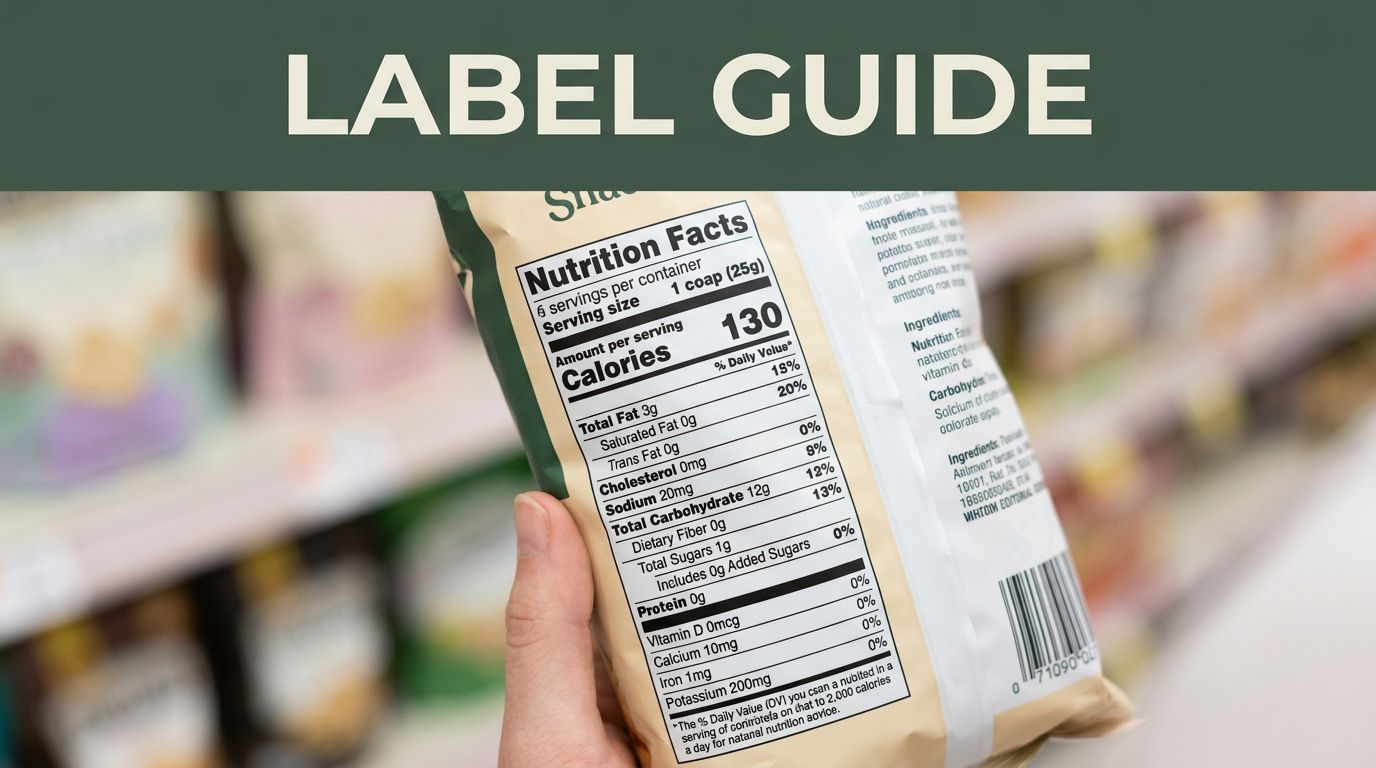
Ever grabbed a snack, then wondered, “Is this actually a healthy choice?” You’re not alone. Food labels can feel like a wall of tiny numbers.
Here’s the good news: when added sugars are shown on labels, people tend to cut back. One FDA-related research estimate suggests people could reduce sugar calorie intake by about 6.8% when they use added sugar info. Also, the 2016 FDA Nutrition Facts label update is still the format most packages use today.
In this guide, you’ll learn how to read the serving size and calories first, spot the key nutrients and % Daily Value, and check the ingredients, allergens, and claims. By the end, you’ll know what to scan, what to ignore, and how to avoid common label traps.
Spot Serving Sizes and Calories Right Away
Start at the top. On the Nutrition Facts label, serving size and servings per container come first. That matters because the rest of the numbers are based on one serving.
If you eat more than one serving, you’ll need to multiply the calories and nutrients. Otherwise, the label numbers won’t match what you actually ate.
For example, let’s say a cereal box says 10 servings per container, and you pour a bowl that’s about 2 to 3 servings. Your “100 calories” per serving becomes roughly 200 to 300 calories for that breakfast. It’s not complicated, but it’s easy to miss.
Next, check the Calories line. It usually stands out in bold so you can spot it fast. Then ask one simple question: “Does this match the amount I’m planning to eat?”
The FDA also reminds shoppers that labels are meant to reflect typical portions, not what you might eat out of habit. So take a quick look at the serving size and compare it to your usual portion. If they don’t match, slow down. Do the math now, or you’ll pay for it later in your “why did this add up?” moment.
If you want the official breakdown of each part, use How to Understand and Use the Nutrition Facts Label (FDA).
Why Serving Size Tricks Beginners
Serving size tricks beginners because it can feel too small.
Chips, yogurt, and candy are common examples. The label may list a serving that looks like a snack. But in real life, one “serving” might turn into two or three.
To adjust quickly, try this mental move:
- Find your portion
- Estimate how many servings it is
- Then multiply calories (and key nutrients)
You don’t need perfect math. You need a good approximation so the numbers become meaningful.
Decode the Main Nutrients Step by Step
Now you’re ready for the nutrient section. Think of this part like a dashboard. It shows what’s inside, and it hints at how often you should eat that food based on daily limits.
Most labels list nutrients in grams (g) and milligrams (mg). You’ll also see % Daily Value (%DV) on many lines, which makes comparisons easier.
Here’s the typical flow:
- Fat (including saturated fat)
- Cholesterol (if listed)
- Sodium
- Total carbohydrate
- Fiber
- Total sugars
- Protein
- Plus vitamins and minerals
If you want a guided map of what each line means, read What’s on the Nutrition Facts Label (FDA).
Fats and Sodium: Watch These Closely
For fats, start with total fat and especially saturated fat. On many labels, trans fat appears too. Trans fat is often something to avoid or keep very low.
Then move to sodium. Sodium adds flavor, but it can add up fast. If you’re trying to eat heart-healthier, sodium is usually one of the first numbers worth checking.
A simple example helps: frozen meals and packaged snacks often carry both higher saturated fat and higher sodium. That combo can quickly push you toward daily limits.
Carbs, Sugars, and Fiber Basics
For carbs, labels break things into sections:
- Total carbohydrate
- Dietary fiber
- Total sugars
- Sometimes added sugars (on many packaged foods)
Fiber is your friend. It supports digestion and helps you feel full. So when you compare two bread options, fiber can be a strong deciding factor.
Sugars are trickier. Total sugars include natural sugars and added sugars. If the label lists added sugars, treat that as the one to limit most. Natural sugars in fruit come with fiber and nutrients, so they don’t work the same way.
Protein, Vitamins, and Minerals Essentials
Protein helps with muscles and staying full. If you’re comparing two snack bars, protein can show which one may keep you satisfied longer.
Some labels also include vitamins and minerals. Common ones include:
- Vitamin D
- Calcium
- Iron
- Potassium
You’ll see %DV for these too. Those numbers help you spot whether the food is a meaningful source.
Use Percent Daily Value to Make Fast Choices
Percent Daily Value, or %DV, turns label reading into quick comparisons. It tells you how much one serving contributes to a daily target.
Most labels use a 2,000 calorie daily diet for the math. So treat %DV as a guide, not a perfect personal rule.
Here’s the cheat sheet:
| %DV on the label | What it usually means |
|---|---|
| 5% or less | Low amount |
| 20% or more | High amount |
In practical terms, you can scan for key limit nutrients first. For many people, sodium is one to watch. If a serving shows sodium at 20% DV, that’s a lot for one snack.
You can also compare similar foods without doing long math. For example, pick the option with lower %DV for sodium or lower %DV for added sugars, then check fiber and protein.
If you want a clear, official explanation, this FDA resource is handy: Understanding and Using the Nutrition Facts Label (FDA PDF).
Check Ingredients, Allergens, and Smart Claims
The ingredients list and the claim section can make or break the label.
First, scan the ingredients list. Ingredients are listed by weight, from most to least. That means the first few items matter most.
Second, look for allergens. In the US, major allergens must be declared. Common ones include milk, eggs, wheat, soy, fish, shellfish, peanuts, tree nuts, and sesame. Allergens are often bolded in the ingredient list.
Third, pay attention to claims. Words like “low fat” or “healthy” sound reassuring, but they follow rules. Sometimes a “low fat” product uses extra sugar to stay tasty.
Also, be aware that claims can’t just mean what you hope they mean. They must meet specific requirements. And low-fat doesn’t always mean low added sugar.
On top of that, FDA is still working on front-of-package nutrition labeling ideas. Current info shows no new front-of-package Nutrition Facts changes took effect by March 2026, though the proposal is still under review.
For allergen labeling basics from the FDA, see Food Allergen Labeling Guidance for Industry (FDA).
Ingredients List Secrets
Want a quick skill that improves your shopping fast?
Look for patterns:
- Long ingredient lists often point to more processing.
- Ingredients ending in “-ose” can signal different types of sugar.
- If “sugar” or syrup appears early, that food likely has more added sweetness than you expect.
You don’t need to fear every processed ingredient. Still, the list helps you spot hidden added sugars and salts.
Allergens and Claims You Can Trust
When allergies are involved, don’t guess. Check the ingredient list every time, even for familiar brands. Formulas can change.
For claims, remember this rule of thumb: claims are designed to be consistent, but they’re not the whole story. “Healthy” might still be high in sodium. “Low fat” might be higher in added sugars. Always pair claims with the nutrient lines.
Beginner Tips to Avoid Label Traps
Most label mistakes come from skipping steps.
The top traps are:
- Ignoring serving size
- Mixing up total sugars and added sugars
- Trusting claims without checking the nutrient numbers
Instead, use a simple order:
- Serving size and servings per container
- Calories
- %DV for nutrients you limit
- Ingredients list for added sugars and salts
- Allergens if they matter for you
If you try to read every line every time, you’ll burn out. You just need a routine.
Quick Habits for Lifelong Wins
Try a weekly label challenge. Pick one food you buy often and compare two brands using %DV and the ingredient list.
You can also use your phone to keep notes like:
- “This cereal has less added sugar.”
- “This snack bar has more fiber.”
- “This sauce has too much sodium.”
Small changes add up. Over time, you’ll stop guessing. Then healthier choices feel normal.
Conclusion
You started this article because you grabbed a snack and wondered, “Is it healthy?” Now you have a better answer, because you can read the label in order.
Begin with serving size, use %DV to compare fast, and check the ingredients before you trust claims. That one habit helps you avoid surprises and make choices you can feel good about.
Next time you’re shopping, pick one item and read its label on purpose. Then notice how much easier it gets. What label detail do you plan to check first?